

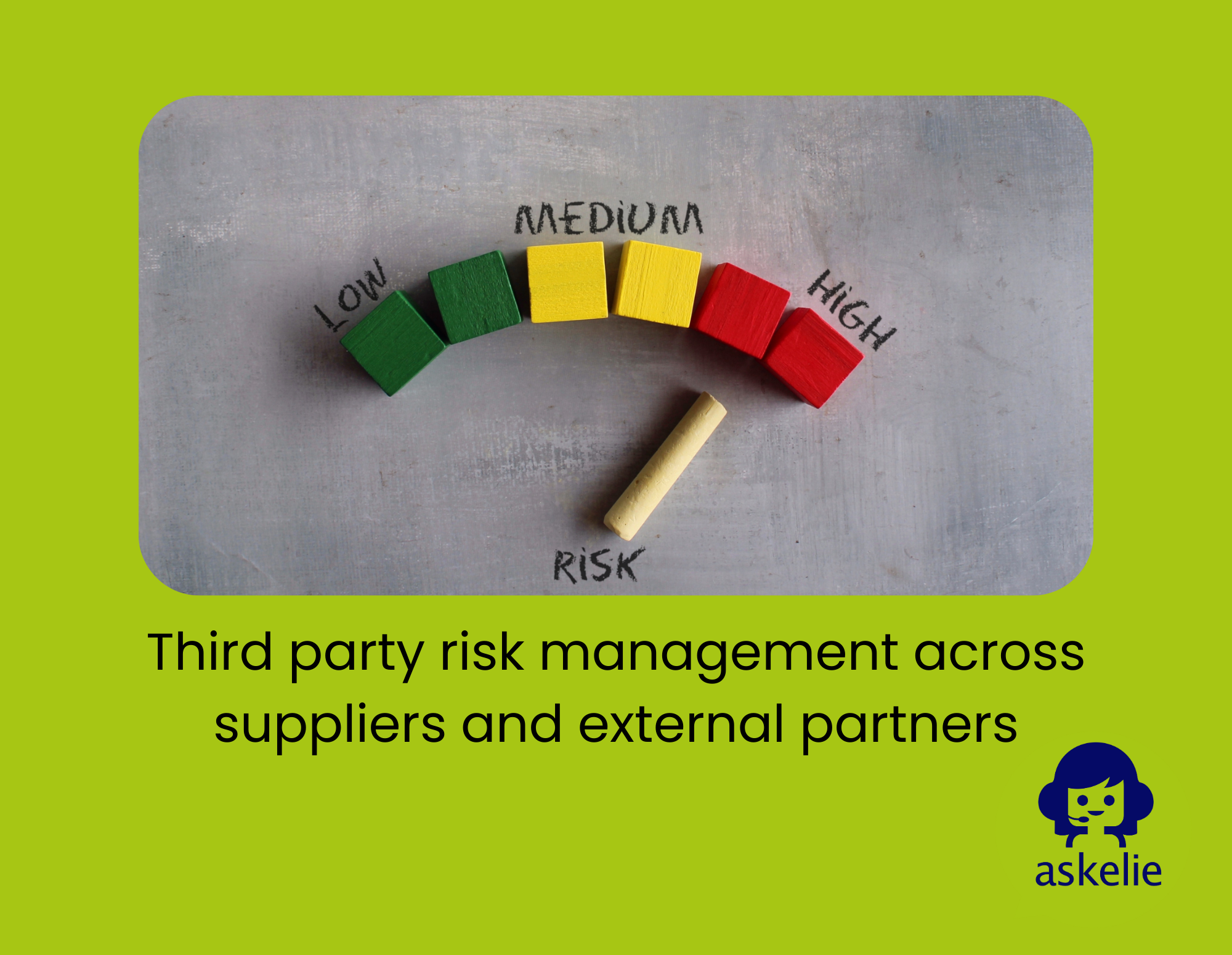
Third Party Risk Management Is Not the Same as Supplier Risk
Third Party Risk Management Is Not the Same as Supplier Risk
Third party risk management is often used as a catch all phrase. In practice, it is frequently confused with supplier risk, vendor risk, or procurement compliance.
That confusion creates gaps.
When organisations treat all third parties the same, they either over control low risk relationships or under manage high risk ones. Neither approach works.
Understanding the difference between third party risk and supplier risk is essential if organisations want risk controls that are proportionate, defensible, and workable at scale.
What managing 3rd party risk actually means
Third party risk refers to the risks introduced when an organisation relies on external parties to deliver services, access systems, or handle data.
These third parties may include
• Suppliers of goods or services
• Outsourced service providers
• Technology vendors
• Professional advisers
• Partners and intermediaries
Not all third parties are suppliers in the traditional sense, but all can introduce risk.
That risk may relate to data protection, operational resilience, regulatory compliance, financial exposure, or reputation.
Why supplier risk is only part of the picture
Supplier risk management focuses specifically on organisations that provide goods or services under contract.
This is an important subset of third party risk, but it is not the whole picture.
For example
• A cloud software provider may not be a traditional supplier, but it carries significant data and operational risk
• A consultancy may never touch systems, but it may influence regulated decisions
• A subcontractor may not appear on procurement registers, but still access sensitive information
Treating all of these as standard suppliers creates blind spots.
The risks of treating third party risk as a tick box exercise
Many organisations attempt to manage third party risk using the same tools and processes they use for supplier onboarding.
This usually involves
• A generic questionnaire
• A one off risk score
• Minimal follow up unless something goes wrong
The problem is that third party risk is dynamic.
Risk changes when
• Access levels increase
• Services expand
• Regulations change
• Subcontractors are introduced
• Financial stability shifts
Static assessments do not capture this movement.
Why regulators care about third party risk
Regulators are increasingly focused on how organisations manage third party relationships.
This is particularly true in sectors where
• Data is shared externally
• Services are outsourced
• Operational resilience is critical
• Accountability cannot be delegated
Regulatory expectations are shifting from policy statements to demonstrable control.
Organisations are now expected to show
• How third parties are assessed
• How risk is monitored over time
• How issues are identified and addressed
• How decisions are documented
Third party risk that relies on spreadsheets and email trails is difficult to defend.
What effective management of third party risk looks like
Effective management of third party risk is structured but flexible.
In practice, it should
• Categorise third parties by risk type and impact
• Apply proportionate controls based on that risk
• Standardise assessments without over simplifying
• Track changes over time rather than snapshots
• Maintain clear audit evidence
The goal is not to eliminate risk. It is to make it visible and manageable.
The role of automation in managing 3rd party risk
Automation is critical when third party volumes increase.
Manual processes struggle because
• Reviews become inconsistent
• Evidence is hard to track
• Follow ups are missed
• Ownership is unclear
Automation helps by
• Applying consistent logic to assessments
• Flagging changes that require attention
• Reducing manual review effort
• Supporting continuous oversight
This allows teams to focus on judgement and escalation rather than administration.
AskTARA and third party risk management
AskTARA is designed to support structured risk management without turning it into a bureaucratic burden.
It enables organisations to
• Design tailored questionnaires based on risk type
• Analyse responses consistently across third parties
• Identify gaps, inconsistencies, and missing evidence
• Track risk changes over time
• Support audit and compliance requirements
By separating risk logic from individual judgement, AskTARA improves consistency without removing accountability.
Why proportionate control matters
Not all third parties deserve the same level of scrutiny.
Effective management of 3rd party risk recognises this and scales controls accordingly.
High risk third parties may require
• Deeper assessments
• More frequent reviews
• Clear escalation paths
Lower risk third parties should not consume unnecessary effort.
This proportional approach improves adoption and reduces resistance from the business.
Measuring success in managing third party risk
The effectiveness of managing risk is not measured by how many forms are completed.
It shows up in
• Fewer unexpected third party issues
• Earlier identification of emerging risks
• Stronger audit outcomes
• Better informed decision making
• Clearer accountability
When third party risk is visible, organisations respond earlier and more calmly.
Final thought
Management of Third party risk is not about adding another layer of process. It is about understanding where dependency introduces exposure.
Supplier risk is part of that picture, but it is not the whole story.
Organisations that distinguish clearly between third party risk and supplier risk are far better placed to apply controls that are proportionate, defensible, and effective.
That is where structured tools like AskTARA make a real difference.
Comments are closed