Why Every Organisation Now Needs an AI Usage Policy After the Latest Employee Misuse Headlines
Why Every Organisation Now Needs an AI Usage Policy After the Latest Employee Misuse Headlines
Over the past year, newspapers and industry sites have been full of stories about employees using AI tools in ways that put organisations at risk. Some stories are dramatic, involving leaked confidential files or unapproved tools being used for sensitive work. Others are smaller, more subtle and far more common, like staff pasting client information into public chatbots without thinking. The frequency of these stories has made one thing clear. Every organisation now needs an AI usage policy that brings structure before something goes wrong.
The rise of tools like ChatGPT, Gemini and CoPilot has created a moment where employees reach for AI instinctively. They are trying to be helpful. They want to work faster. They are trying to keep up. The problem is that most organisations do not have guidance in place, so people are left to guess what is acceptable. This is where risks appear.
The real problem is not bad behaviour, it is lack of clarity
Most staff are not trying to do the wrong thing. The issue is that they simply do not know the rules. They do not understand what they can safely paste into a public AI tool. They do not know which platforms keep data. They do not know which models store information and which ones do not. They are also unaware that many free tools retain prompts to train future versions.
This is why relying on common sense does not work. People assume AI tools are like search engines. They are not. The wrong input can turn a small mistake into a major problem.
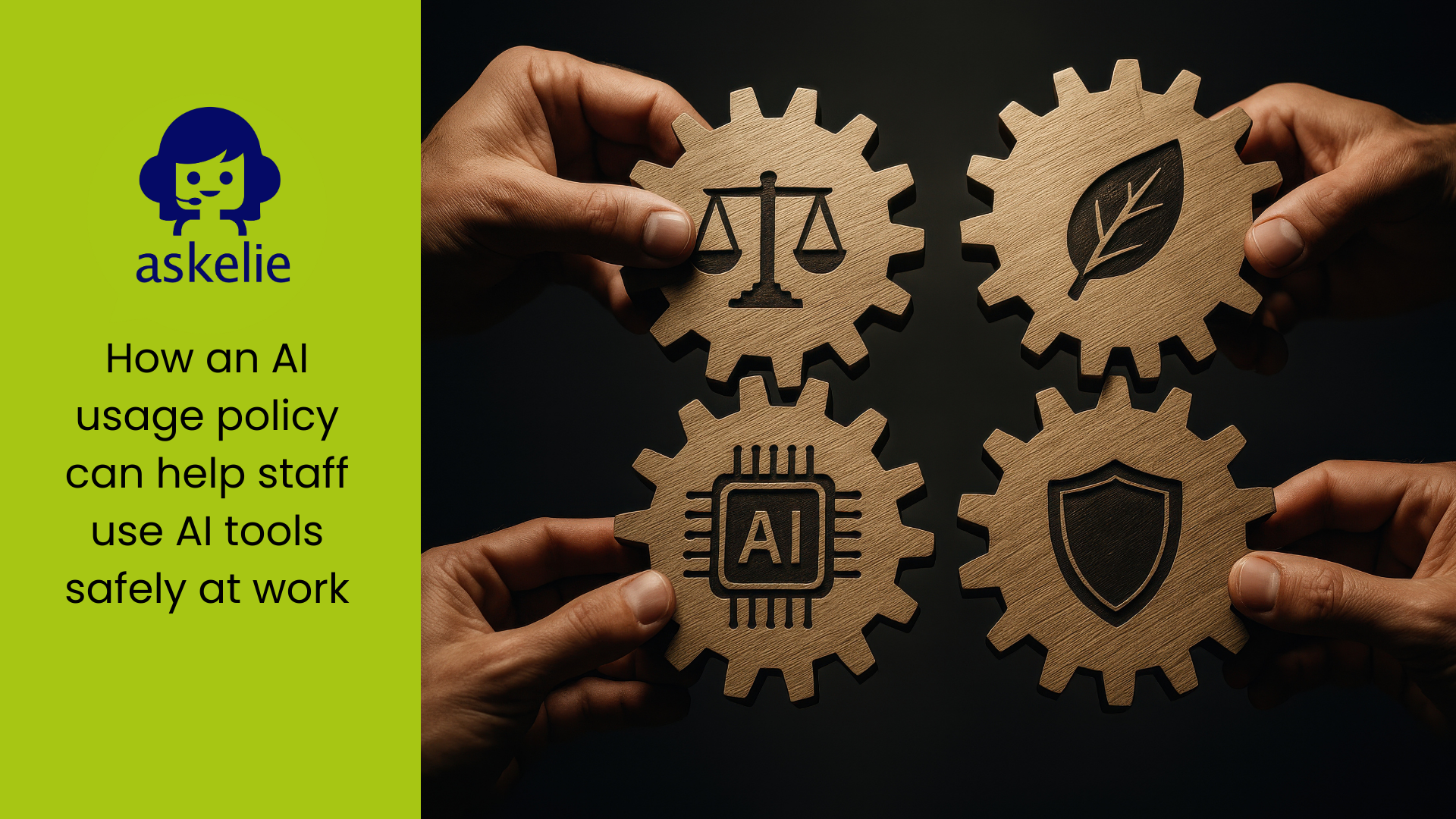
An AI usage policy stops the guesswork. It sets out clear expectations for staff, gives practical examples and explains how to use AI responsibly. People want guidance, not punishment. An AI usage policy gives them confidence to do the right thing.
The risks are different from traditional data handling mistakes
AI misuse looks different from normal data mistakes. When an employee emails the wrong file to the wrong person, you see it immediately. AI misuse is invisible. It can happen at home, on a personal laptop, on a phone or inside a browser window without anyone noticing.
The most common risks include:
• Copying client emails into public chatbots
• Pasting contract wording into free tools to get a summary
• Using AI to draft sensitive messages without checking the source model
• Uploading documents to tools that store user input
• Mixing personal and work accounts
• Using the wrong tool for regulated roles
• Sharing confidential information outside controlled environments
None of these actions feel malicious. They feel helpful. That is why they happen so easily.
The recent news headlines are a wake-up call
Stories in mainstream media have highlighted real incidents:
• Employees accidentally sharing sensitive client records
• Staff using chatbots to write communications that contain confidential details
• Financial institutions warning staff not to use public AI tools
• Public sector teams breaching policy without realising it
• Schools and councils finding AI written content inside safeguarding records
These stories have created a public narrative. It is not about AI going wrong. It is about people using AI without rules. Organisations that produce an AI usage policy now are positioning themselves ahead of the curve rather than reacting later.
What a good AI usage policy actually covers
An AI usage policy should be simple. It should not intimidate staff. It should give clear, practical rules they can follow every day.
A strong policy normally includes:
• What AI tools are approved
• What AI tools are prohibited
• Which information can never be used in public models
• How to handle confidential client data
• How to identify safe platforms
• How to ask for help if unsure
• How outputs must be checked before use
• When human review is required
The goal is clarity. People cannot follow rules they do not understand. The best policies are written in plain language and fit on one or two pages.
Why the lack of guidance creates friction between teams
When AI use becomes messy, friction follows. IT teams get frustrated because they cannot track what is happening. Compliance teams lose confidence that staff are following rules. Senior leaders become nervous about reputational damage. Staff feel blamed for mistakes they were never trained to avoid.
A clear AI usage policy reduces this tension. It gives teams a shared framework, shared expectations and shared confidence.
How organisations can roll out policies without slowing creativity
Some leaders worry that AI usage rules will slow teams down or discourage people from experimenting. The opposite is true. Rules give people permission to work faster because they know where the line is.
A good rollout includes:
• A simple one page summary
• A team briefing that covers the basics
• Practical examples of allowed and not allowed use
• Signposting to approved AI platforms
• Encouraging innovation within safe boundaries
This builds a healthy AI culture where people use tools confidently but responsibly.
How askelie® fits into the picture
askelie® gives organisations a structured, controlled and auditable environment for using AI at work. Staff do not need to guess whether the platform stores data or shares it. They do not need to wonder whether information is being used to train a wider model.
The AI usage policy directs staff to the right tool. The platform itself enforces the rules. Both work together.
The future of AI use in organisations
AI will become more common, not less. The organisations that succeed will be the ones that guide staff early, give them confidence and remove ambiguity. Tools will evolve quickly, but the principle remains the same. People need clarity, support and structure.
An AI usage policy is one of the simplest steps that any organisation can take to prevent mistakes, reduce risk and give teams confidence to work faster and smarter.