AI Policy Implementation and Why Most AI Policies Fail in Practice
AI Policy Implementation and Why Most AI Policies Fail in Practice
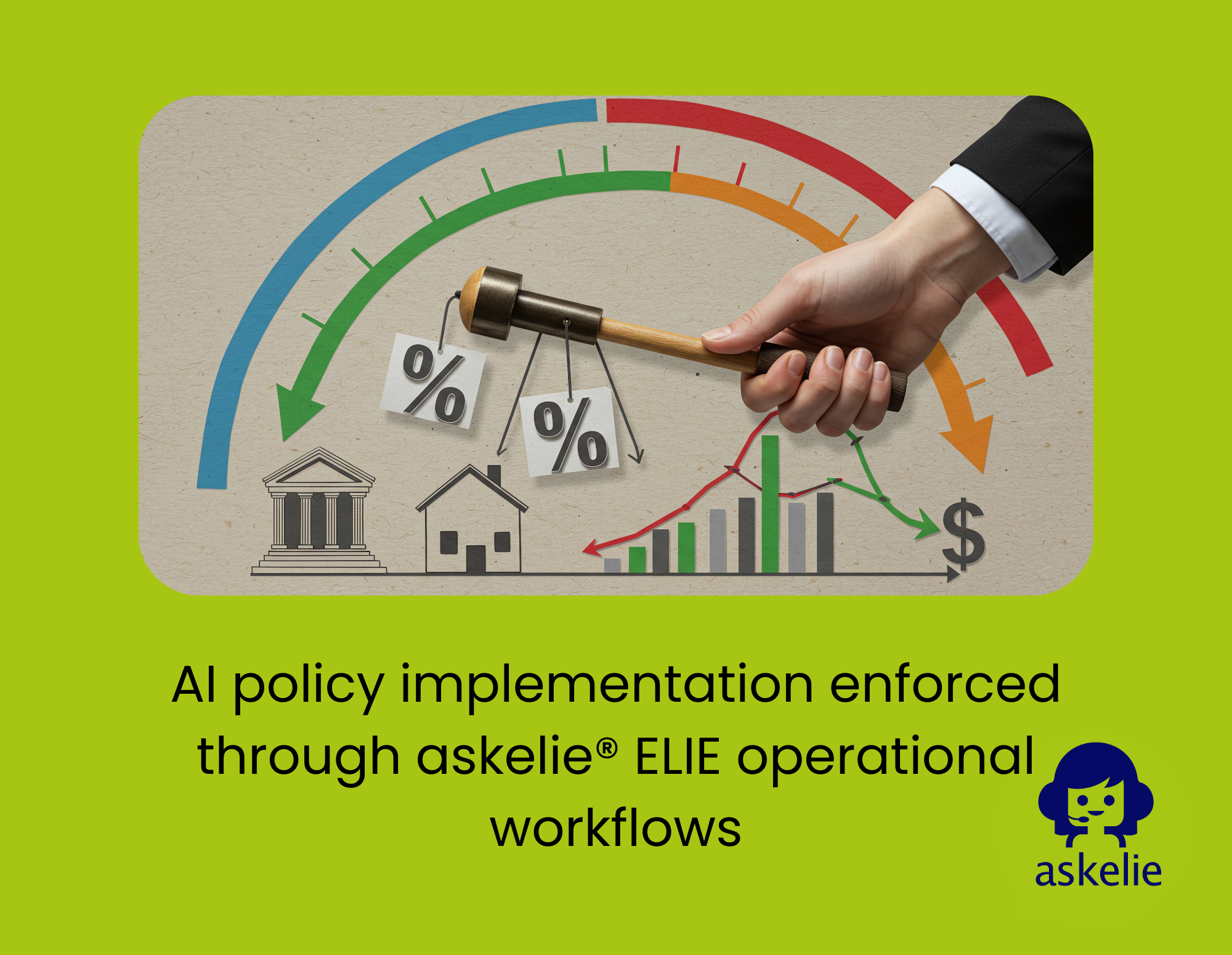
AI policy implementation has become one of the quiet failure points of enterprise AI adoption. Many organisations now have AI principles, usage guidelines, or ethical frameworks approved at senior level. On paper, this looks like progress. In practice, those policies rarely shape how AI is actually used day to day.
The result is a growing gap between what organisations say they do with AI and what happens in real workflows. That gap creates risk, undermines trust, and ultimately weakens return on investment.
Why AI policy implementation keeps breaking down
AI policy implementation usually fails for one simple reason. Policies are written as documents, while AI is used inside workflows.
Teams generating content, analysing information, or drafting documents are focused on delivery, not compliance. If governance lives outside the systems they use, it is ignored, not out of malice, but out of necessity.
This is not a cultural problem. It is an operational one. This disconnect between written policy and real operational behaviour is often the same reason organisations struggle to demonstrate real value from AI investment, which is explored further in our article on AI ROI and how organisations turn AI spend into real value.
The illusion of safety created by policy documents
Many organisations assume that having an AI policy reduces risk. In reality, a policy that is not embedded into daily work can increase risk by creating a false sense of control.
When something goes wrong, leaders discover that
- No one can show where AI was used
- Outputs were not reviewed consistently
- Responsibility is unclear
- The policy was never referenced at the point of use
This is where AI policy implementation collapses.
What effective policy implementation actually requires
Effective AI policy implementation shares a few characteristics
- Governance exists at the point of action, not after the fact
- Review and approval steps are unavoidable
- Accountability is visible and recorded
- Compliance happens automatically rather than by memory
This requires systems, not reminders.
How askelie® approaches AI policy implementation
askelie® does not treat policy as a static artefact. The ELIE platform turns policy intent into operational behaviour.
Instead of asking staff to remember rules, ELIE builds those rules into workflows. AI assisted actions cannot progress without review. Outputs are captured, versioned, and approved as part of normal work.
This shifts AI policy implementation from theoretical compliance to practical enforcement.
Embedding policy into real workflows
ELIE embeds AI policy implementation in several ways
- Workflow gates require human approval before AI outputs are used
- Role based access defines who can approve what
- Version control records how outputs evolve
- Audit trails show exactly how policy was applied
Governance becomes part of the workflow, not an external checklist.
AI policy implementation across core functions
AI policy implementation often breaks down because different teams use AI in different ways.
ELIE provides a consistent approach across functions
- In HR, AI assisted communications and policies are reviewed before release
- In legal and contracts, AI drafted clauses pass through structured review
- In education and training, AI generated content is checked for accuracy and appropriateness
Each use case follows the same governance logic, even though the work differs.
Reducing friction without reducing control
One of the biggest fears around AI policy implementation is that it will slow work. ELIE avoids this by automating the governance mechanics.
Approvals, logs, and version tracking happen in the background. Staff focus on delivery while governance remains intact. This balance is essential if policy is to be followed rather than bypassed.
Making accountability explicit
AI policy implementation fails when accountability is vague.
ELIE makes accountability explicit. Every approval is tied to a role. Every output has a clear owner. If questions arise later, the organisation can show exactly who reviewed and approved the work.
This clarity protects individuals as much as the organisation.
Supporting global and distributed teams
For organisations operating across regions and time zones, AI policy implementation becomes even harder. Informal oversight does not scale.
ELIE provides a shared operational standard regardless of location. Teams follow the same workflows, apply the same policy controls, and work from the same approved content.
This consistency reduces risk and improves confidence.
Measuring your policy implementation effectiveness
Most organisations struggle to measure whether AI policy implementation is working.
ELIE enables meaningful indicators
- Percentage of AI assisted outputs reviewed
- Frequency of overrides or rejections
- Reuse of approved content
- Reduction in untracked AI use
These metrics show whether governance is real or symbolic.
Policy implementation as a leadership signal
How AI policy implementation is handled sends a strong message.
If governance is ignored in practice, staff learn that speed matters more than responsibility. If governance is embedded into systems, good behaviour becomes the default.
askelie® supports leaders who want innovation without creating hidden risk.
Why AI policy implementation is becoming unavoidable
As AI becomes more embedded, expectations around accountability will increase. Organisations that rely on informal controls will struggle to explain themselves under scrutiny.
Those that embed AI policy implementation into workflows will adapt calmly.
Conclusion
AI policy implementation fails when it lives only in documents.
The organisations that succeed are those that translate policy into everyday behaviour through systems that make governance unavoidable and practical.
askelie® with the ELIE platform provides a grounded, operational way to turn AI policy into real, enforceable practice.